


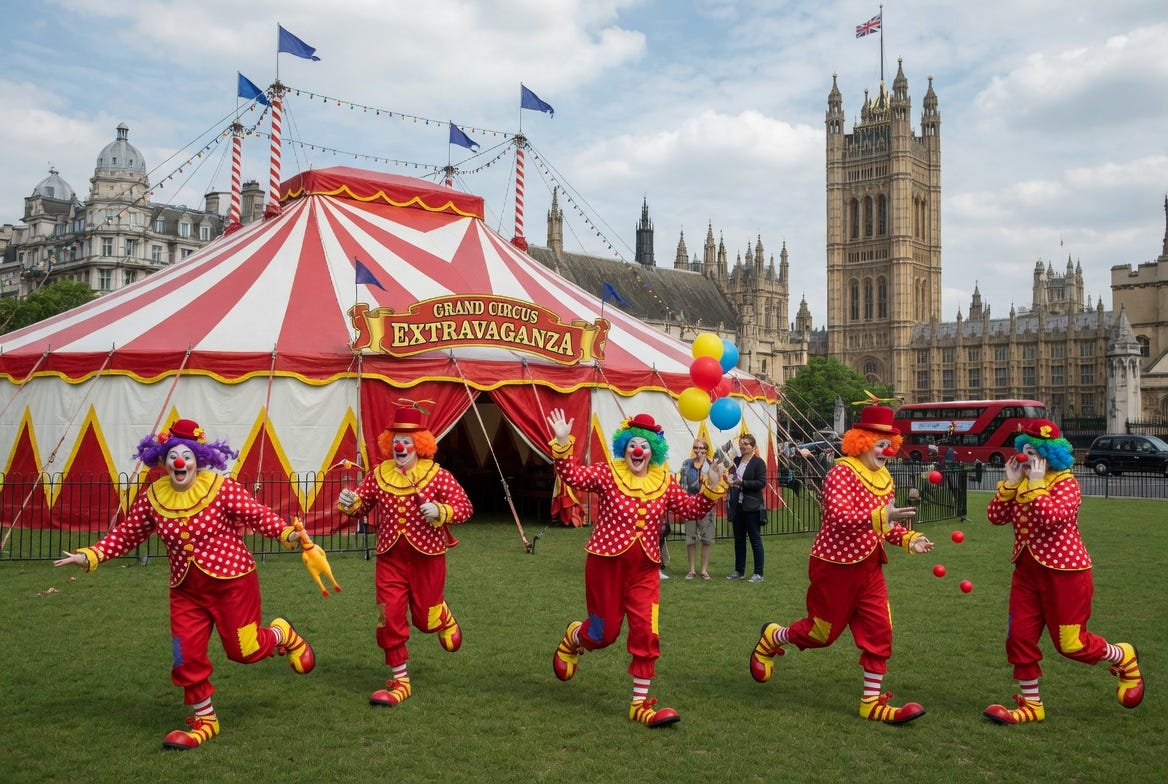
After just a few days, the Burnham government looks a circus.
With weary inevitability, the reshuffle has created resentment and voices off, with rumours of a Starmerite parliamentary faction establishing itself. Reducing the cap on bus fares is a leading announcement, alongside about 86p a week off energy. The new Defence Secretary has rightly apologised when caught making light of early prisoner release. Putting Ed Miliband in the Foreign Office is a smart move I predicted – to get him out of the country so he can’t wind up his colleagues. And we have had our first U-turn: the personal allowance won’t be going up after all.
Some of the new front bench remains tainted by recent scandal. Angela Rayner returns to Cabinet with the housing brief, a year after resigning over an underpaid tax bill on her own flat. Louise Haigh, sacked by Starmer after a fraud conviction came to light, returns as First Secretary of State and effectively deputy prime minister, with a responsibility for ethics.
It is a familiar pattern: attractive but ill-considered and damaging ideas, sometimes rolled back, familiar characters return with a fresh chance to fail, ego over public service and a manifest belief governing is easy.
This is the context in which they seek to further their ideas for an “active state”: more public spending, more official control, more direction of the economy, and more power for mayors and ministers over people freely cooperating.
