


In September 2025, the BBC reported Commons Speaker Sir Lindsay Hoyle’s warning that parliament is vulnerable to foreign spies. Recently, The Times reported updated guidance under which one of five designated cabinet members may authorise certain intelligence activities by UK agencies involving MPs if the prime minister is unavailable.
Together, these stories underline that parliament remains a live target for hostile‑state espionage.

When we discussed the dropped China spy case on The Counter Insurgency, the Director of Fighting for a Free Future, Harry Richer revealed that my staff induction covered basic counter espionage, starting with accepting the reality that MPs and their staff are targets.
This article sets out five basic steps MPs and their staff can take to recognise and avoid approaches by foreign intelligence services (FIS) and their agents.
One line in my staff induction keyed the conversation about counter-espionage: “Foreign nationals”. It seemed a bit ridiculous until the collapsed trial hit the news, so I played it down.
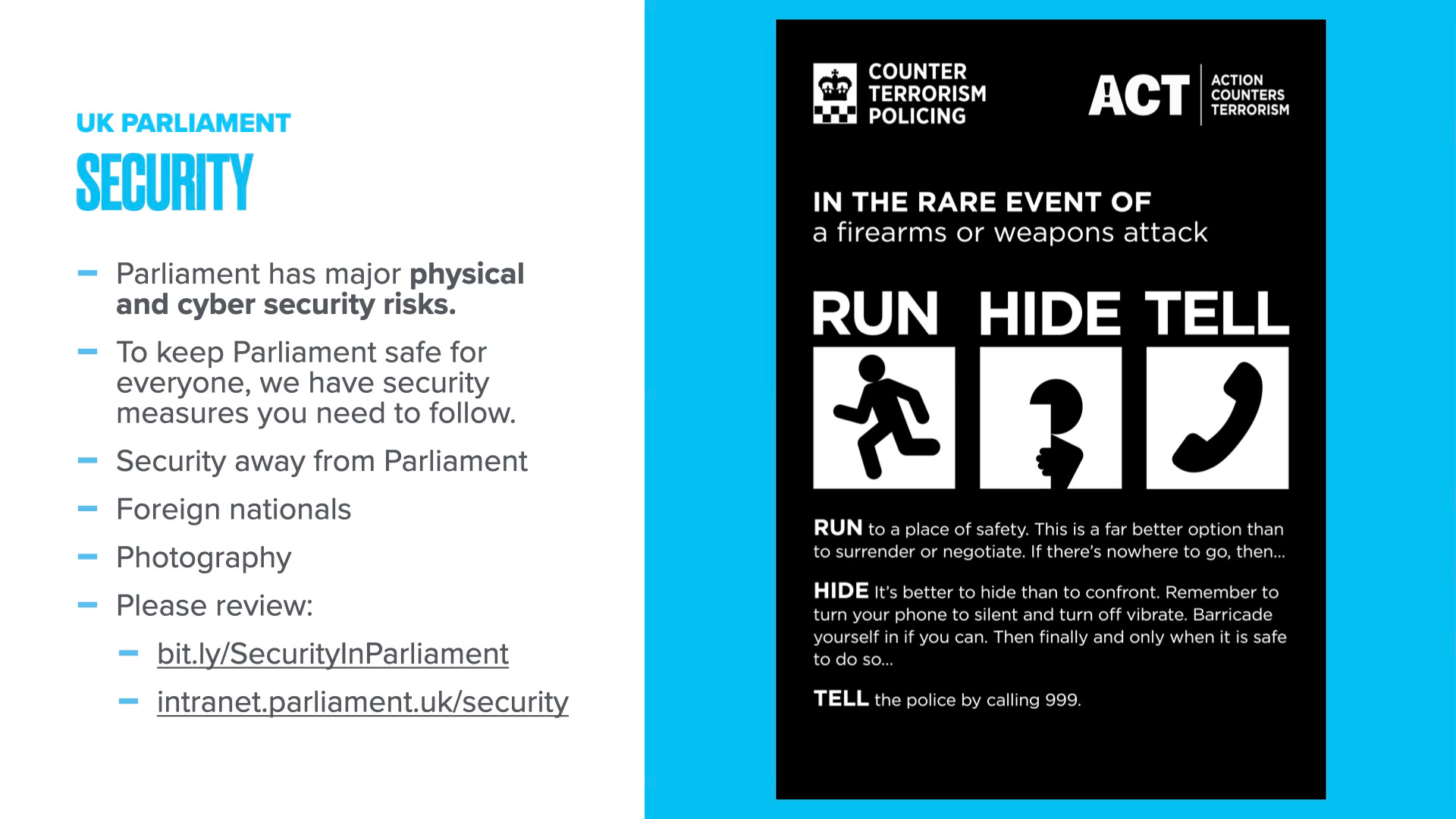
Here are the key points for MPs and staff:
Accept that you are a target for foreign intelligence services. Of course, the work of spies includes influencing and establishing the intentions and vulnerabilities of legislators and members of the government across a wide field. That means accessing MPs. And if spies want to obtain information about and convey information to MPs, then of course, parliamentary staff are people of interest too, including their IT and communications.
Recognise that much espionage is low-level, at least at first. Officers (that is, employees of FIS) and agents (those they recruit) are not likely to dive straight in with a request to steal a laptop. The process of cultivating people is long and slow (or should be), escalating towards serious action. Spies need to discover patterns of behaviour and preferences in order to find ways to establish relationships. So what you put on social media matters, as does what you talk about in Westminster’s pubs.
Watch out for M.I.C.E.: the four main methods of recruiting people revolve around money, ideology, compromise and ego. People are vulnerable when they are short of resources, support the agenda of a foreign power, are vulnerable to blackmail or want the prestige of thinking they are James Bond. That way lies criminality and ruin.
Beware of approaches from foreign nationals. Plenty of electors care what happens overseas, whether in Kashmir (India, Pakistan, China), Xinjiang (China), the Middle East or in relation to Russia. MPs will therefore take an interest in foreign affairs, establishing a wide range of all-party parliamentary groups on countries, areas and regions, and it is perfectly reasonable to engage with foreign nationals in this context. As so often, the trick is to recognise other people’s agendas and consistently, resolutely place our own country and constituents first.
Beware of persistence. If someone seems either particularly impatient or especially persistent in seeking to strike up a friendship, take advice from parliamentary authorities, perhaps via your MP if you are parliamentary staff. If you work in parliament, experts are there to help and will guide you to do what is right. There is no need to be ashamed of spotting an approach and no need to deal with it alone: professionals are there for you.
Once MPs and their staff appreciate that they are the targets of intelligence gathering, avoiding falling prey to it is fairly straightforward. Perhaps the hardest step is acknowledging, amid the day-to-day drudgery, that what you do is of interest.
After the past year’s news stories, that is no longer in doubt.
Further reading
It is worth having a look at MI5 news, including their latest public threat update.