

The Bolsonaro dynasty came within touching distance of reclaiming the Brazil’s presidency. With former president Jair Bolsonaro serving a prison sentence for plotting to overturn the 2022 election, his son Flávio took up the mantle to challenge his father’s old nemesis. Instead, Luiz Inácio Lula da Silva, whose political convictions were forged half a century ago on São Paulo’s unforgiving factory floors, has staged another remarkable comeback. Overturning Flávio’s first-round lead and defying betting-market expectations, Lula secured a historic fourth term in a run-off for the ages.
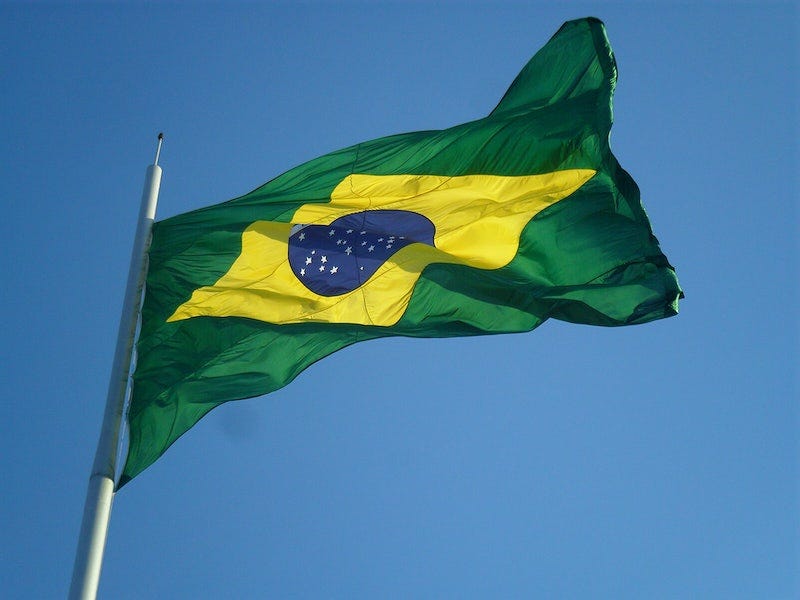
From Javier Milei’s Argentina to José Antonio Kast’s Chile and the end of nearly two decades of socialist rule in Bolivia, South America’s political landscape has shifted to the right. Lula may have bucked that tide in Latin America’s largest economy, but his victory is hardly a ringing endorsement of his economic and political philosophy. Flávio won nearly half the presidential vote, while his Liberal Party emerged as the largest force in both houses of Congress. Lula’s enduring man-of-the-people appeal, coupled with widespread antipathy towards the Bolsonaro family, may have carried him across the finish line. His vision for Brazil, however, has hardly swept the country off its feet.
Lula will have little time to savour his victory. Brazil’s national anthem hails a fearless colossus, destined for greatness. Yet that giant remains weighed down by a state whose swelling pension and welfare commitments consume much of the budget. Since Lula returned to office in 2023, Brazil’s gross public debt has climbed more than 11 percentage points to nearly 83% of GDP. Undeterred, Lula campaigned on higher welfare payments, fresh debt relief for struggling households and more subsidised loans, with little indication he intends to change course. Financial markets delivered a rude awakening. On Monday, Brazil’s stock market plunged nearly 14%, while its currency, the real, lost 8% against the US dollar.
For all their bitter rivalry, Lula would do well to take a leaf out of his adversary’s book. Inspired by Milei’s chainsaw, Flávio Bolsonaro campaigned with his tesouraço, or big scissors, promising to slash bureaucracy, cut taxes and rein in government spending. Where Lula looked to public spending and state intervention to drive prosperity, Flávio placed his faith in the enterprise of ordinary Brazilians. By giving businesses greater freedom to invest, expand and create jobs, he hoped to give millions a better chance to escape poverty through their own efforts rather than remain dependent on the state. Brazil may have rejected Bolsonaro’s pruning shears, but if Lula keeps putting off difficult reforms, the next generation of reformers may find that only a chainsaw will do.
Brazil has spent another election tearing itself apart over who gets the keys to the presidential palace in Brasília. But its hopes of becoming truly free and prosperous depend just as much on keeping arbitrary state power in check. With a stroke of his pen, Supreme Court justice Cristiano Zanin, once Lula’s lawyer, ordered a last-minute extension of voting, citing transport disruptions, subsequently limited to polling stations still open. The intervention raised fresh questions about judicial impartiality; in a country still grappling with the legacy of military dictatorship, where bitter political rivalries increasingly spill into the courts, even the suspicion that justice bends to political power threatens confidence in the rule of law.
Brazil cannot afford to remain indefinitely trapped in the feud between Lula and the Bolsonaros. Whether Flávio would have delivered greater prosperity and freedom remains an open question, but in two successive presidential elections nearly half of the valid votes have gone to a Bolsonaro over Lula.
For decades, Lula has been the larger-than-life protagonist of Brazil’s political drama, his charisma and instinct for survival making him almost impossible to write out of the script. Yet his time on the stage cannot last forever, and his ideological successors may find his electoral magic harder to inherit than his policies. Whether under Lula or after the inevitable changing of the guard, liberty-minded Brazilians may yet turn the tide and usher in an era of greater economic freedom, stronger institutions and prosperity built through their own enterprise rather than dependence on the state.
Richard de Haas has a background in public finance, corporate finance and economic policy, and writes on issues relating to prosperity and free markets.
Just get a judge, who happens to be your mate, to keep the polling stations open until you achieve the right result - what's wrong with that?
Thanks for the update Richard.