


Despair is the conclusion of fools.
– Benjamin Disraeli
Once again, it is officially acknowledged that, on current policies, UK public debt is on an unsustainable upward path over the coming decades. In plain language, that will mean a long period of chronic default on important obligations. See the Office for Budget Responsibility (OBR) Fiscal Risks and Sustainability Report, July 2026.
As ever, a picture tells a thousand words – spending soars, revenue stagnates and debt runs to implausible levels:

Read the Executive Summary or the more helpful CapX article which is not burdened with official niceties, Britain is going bankrupt in slow motion:
The OBR report highlights the challenges an ageing population poses for the UK: sooner or later, taxes rise, spending falls or growth accelerates – duck all three, and we go bankrupt. How painful the correction turns out to be remains a political choice.
As both the OBR and CapX point out, it is not too late to do something about this looming disaster. And the sooner we act, the less painful it will be.
Debt interest is already about £110 billion a year, compared to health (£204 billion), education (£95 billion) and defence (£39 billion): how long can this go on?
How bad is it, really?
The situation and the looming consequences are grave indeed.
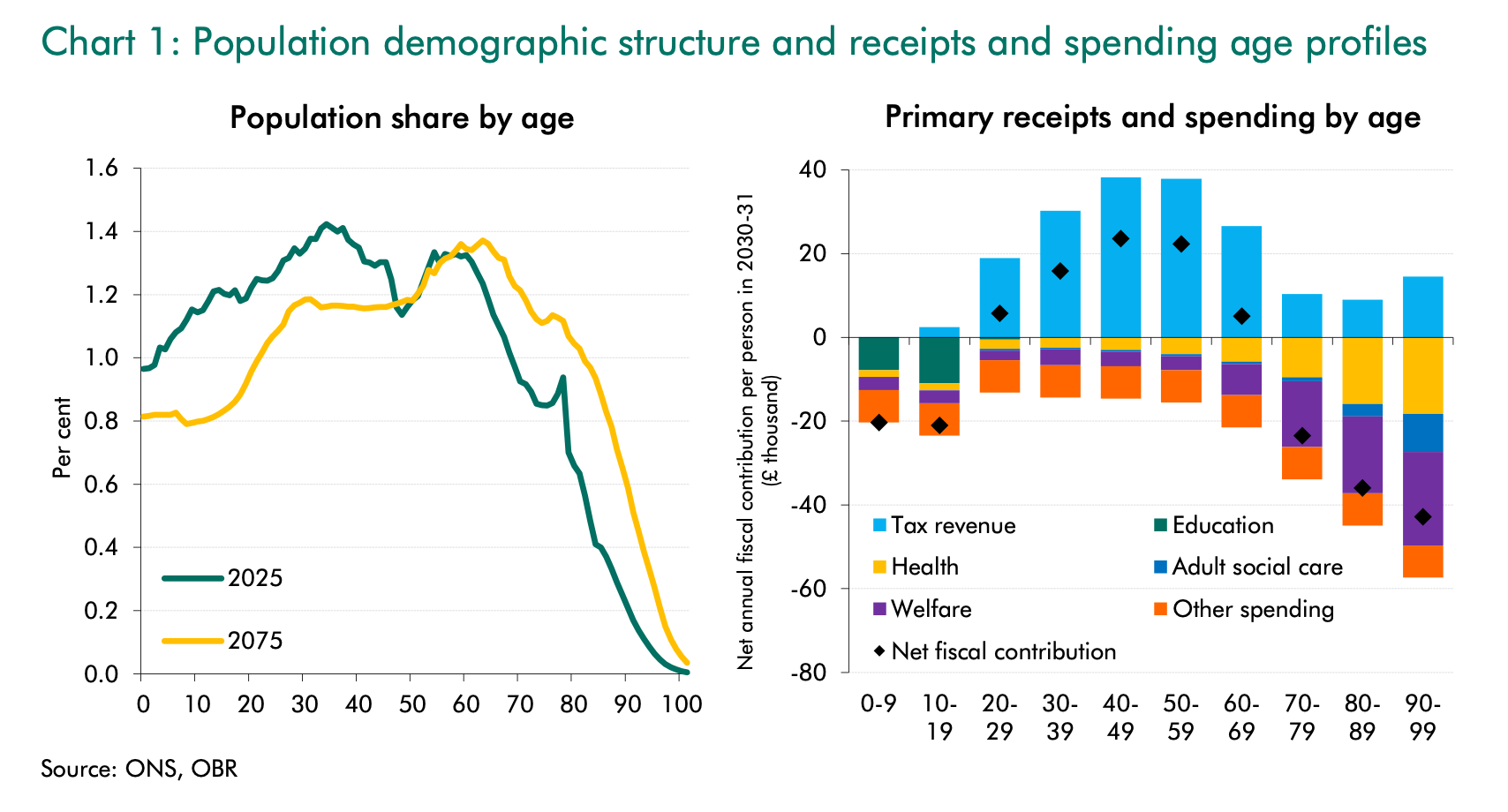
The problems we face cannot be solved by cutting working age welfare benefits or reducing immigration, though both must be done. The report is clear about the origin of our problems: age-related spending. As our population ages:
Health spending is projected to rise from 8% of GDP in 2030-31 to 13% of GDP in 2075-76.
Adult social care spending is projected to rise from 1.2% of GDP in 2030-31 to 1.8% of GDP by 2075-76
State pension spending is projected to rise from 5% of GDP to around 9% of GDP.
Other welfare spending is projected to remain relatively stable.
Having fewer children reduces education spending, tragically. Net Zero’s impact on fuel duty reduces receipts.
The OBR says, with typical understatement:
“if these paths [of debt] did start to materialise, then it is almost certain that governments would have to take action to tighten fiscal policy to restore sustainability at some point.”
They illustrate the action needed by saying the cut needed by 2030-31 would be the entire education budget.
Of course children cannot go uneducated, that’s why a government will have to cut spending where it hurts: pensions, healthcare, social care. It could mean real harm to people who obviously cannot return to work.
I think avoiding those painful cuts is why 14 years of Conservative government left our national defence and our justice system scandalously underfunded: our Chancellors and Prime Ministers cut what would not be immediately noticed.
The OBR conclude,
unsustainable fiscal outcomes that may not occur for some years are today’s challenge not tomorrow’s
What is to be done?
