


With the World Cup on right now—and by the way, c’mon England!—imagine you’re a football coach. You’ve just replaced an old manager whose blunders got the team relegated. Because of that relegation, the club became completely irrelevant. They lost big sponsors, star players walked out, and the club was haemorrhaging money by the day. The fans were furious, and the owner was ultimately forced to resign.
Then you come in—the fresh face with big ideas. The supporters give your hiring a massive vote of confidence. Under your guidance, you drag the club back up to the top flight. The sponsors return, the fans are buzzing, and you bring glory and hope back to the stadium.
Suddenly, you’re a massive club with massive financial backing.
Now it’s time to perform in the top league against the best. But all of a sudden, you start making terrible tactical decisions week after week. Behind the scenes, you implement toxic policies. Instead of supporting your squad, you publicly bash your players to the media day in and day out.
Naturally, your players are miserable. The supporters who once cheered your arrival are now out in force, demanding your resignation and threatening to protest in the streets if you stay. To make matters worse, there’s another coach at another club who is absolutely beloved by your fan base. He openly admits he’s willing to resign from his current gig to come save your team from you—because you’re a terrible manager, and everyone knows that if you stay, the club will slide right back into the second division. That is the ultimate nightmare.
This is exactly what has happened to Keir Starmer.
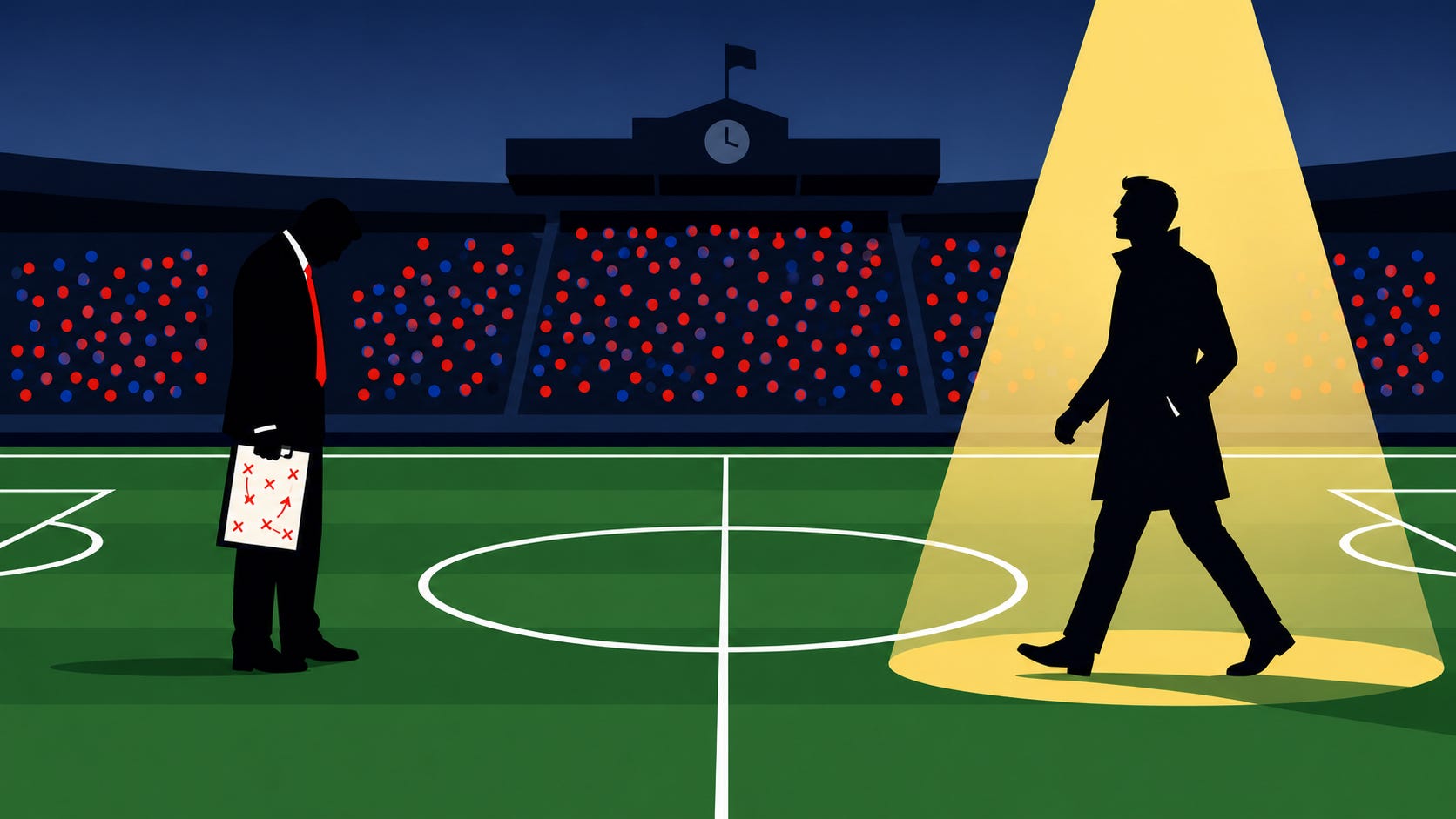
“Mr. Serious”—by the way he combs his hair, you’d think this man has absolutely zero time to play around; his tailored suits practically scream that he means business. He was elected with a historic parliamentary majority—the kind of leverage where you can pass legislation effortlessly, and if an MP steps out of line, you can whip them into a swift U-turn.
What happened to Starmer isn’t just a string of bad policies (though, no pun intended, he barely has any). His true downfall is a total lack of judgment, an inability to govern, and a complete absence of aura. He has no presence, no charisma.
The man tipped to replace him—or who soon might—is Andy Burnham. They call him the “King of the North,” and after his absolute landslide victory in the Makerfield by-election, he wears the title well. But here is the real shocker: Is Burnham actually the solution for the country, or is he just a tactical shield brought in to save the Labour Party from an absolute beating if a general election were called today?
After his speech earlier this week, what the public saw was a prime minister waiting. Announcing a 10-year economic plan, he promised massive reforms to the British political establishment—and there are even reports of him living in Manchester while in office.
But the problem with Andy Burnham is that we still don’t know his tax policy. Yes, if you watched his economic speech, you might have felt refreshed, but it left behind more questions than answers. We still don’t know how he plans to implement those ideas, or if they will even work.
Every Prime Minister has a love-hate relationship with the media, especially journalists. But with Burnham, we saw a man who isn’t even interested in the press. He doesn’t take questions. Frankly, after his speech yesterday ended with thunderous applause, he walked off as if he had just delivered the speech of the century.
You know, this reminds me of Joe Biden’s presidency. Now, before you scream at me, hold on—I’m not saying Burnham is Biden. But if his playbook is to avoid questions, then his administration will do everything it can to shield him from scrutiny. We can’t have that.
On the flip side, Burnham possesses a level of charisma and personality that Keir Starmer simply lacks. He’s capable of making a crowd laugh instead of sounding like a robot.
Burnham is currently implementing “Manchesterism”—a wave of nationalisation measures mixed with a pro-business approach. Does that sound like the Chinese system? Well, no; I’m not implying Burnham is a communist in waiting, especially since some of his policies are genuinely welcome.
For example, his approach of prioritising government contracts for British high street businesses is great. Supporting small businesses will boost the UK economy, but he needs to be careful that this doesn’t devolve into protectionism, where we blindly reject cheaper international bids.
Burnham seems like a decent man, but he’s going to have to learn to take tough questions. If he doesn’t, Kemi Badenoch, the Leader of the Opposition, will eat him alive every Wednesday during Prime Minister’s Questions.
There is so much for Burnham to answer for, such as his plans to nationalise water, energy, and the railways. He needs to explain exactly how that will impact the economy. Perhaps to get up and running, he first needs to look at amending the Employment Rights Bill. While there are good provisions in there to support workers, the “job tax” on employers is damaging. Business owners are becoming uncomfortable hiring new staff; instead, they would rather give longer hours to existing workers or even use automation to do the job.
Ultimately, that is having a massive, negative impact on the economy.
If Starmer is pushed out, the burning question becomes: how long will Burnham actually last in the Prime Minister’s hot seat before his own cabinet or MPs turn on him?
Labour won their mandate on the promise of “change.” Yet two years down the line, the country is deeply divided, and the public simply isn’t feeling the progress they were promised. Now, the party appears to be preparing to swap leaders, installing someone the wider country never actually voted for. Sure, he’s popular up North, but what about the rest of the country? Did the British public vote for him?
Think back to when Rishi Sunak was Prime Minister. The Labour Party was aggressively demanding an immediate general election when he was first appointed. Their core argument? Nobody voted for Sunak, just like nobody voted for Liz Truss. By that exact same logic, nobody has voted for Andy Burnham.
The only democratic move left for the Labour Party is to call a general election and let the voice of the people be heard. The electorate voted for Starmer, not Burnham. If Starmer goes, the country deserves its say.
Will the right honourable member from Makerfield agree with me that a general election is the only right path forward? Yes or no?
We shall wait and see.
Glodi Ntoya is a Leader for Liberty Fellow with Fighting for a Free Future, the Institute of Economic Affairs, and the Adam Smith Institute. He regularly writes on geopolitics and can be followed on X through gNtoya76. You can subscribe to his Substack below.

I think it was a mistake to call for Starmer to go as the replacement was worse. Best for no GE now until Burnham has shown how incompetent he is.
"Now, the party appears to be preparing to swap leaders, installing someone the wider country never actually voted for. Sure, he’s popular up North, but what about the rest of the country? Did the British public vote for him?
The only democratic move left for the Labour Party is to call a general election and let the voice of the people be heard. The electorate voted for Starmer, not Burnham. If Starmer goes, the country deserves its say."
This statement is not correct. We have a parliamentary system where at the national elections, we vote for our constituency MP. The whole country is not voting for Kier Starmer or Andy Burnham (or Rishi Sunak in the last election) unless they are your constituency MP.
Whilst I'm clearly not a fan of the big state collectivist instinct, it is not true that the only democratic move left for the Labour Party is to call a general election. This is why the conservatives didn't call one when changing leader.
Another election is not going to solve anything. Democracy in it's purest sense is two wolves and a sheep voting on who to eat for dinner. Unless we can understand the limits of government and use of force and coercion, unless we move back towards a free society which comes with personal responsibility; every election will be a swing from one side to the other without the necessary improvement in human flourishing.