


Last Sunday, Keir Starmer took to the Guardian to declare that workers, pensioners and children were all better off, that the critics should be ignored, and that his government was “standing up for working people.” The piece coincided with a raft of new measures coming into force on 7 April 2026, including a a 4.8% pension rise and the scrapping of the two-child benefit cap. The Prime Minister’s overall message in the left-wing paper was simple: Labour spends money on the people who need it, and it has a “robust and credible economic plan” to make that sustainable.
What the article did not answer is how Labour plans to pay for these and all of its other handouts, including other areas of increased benefit spending. Tax rises are the answer. They are not popular, and therefore, the Prime Minister did not mention them in his article, but tax rises have been an ever-present feature of this Government and will continue to be so; the Labour Government and its MPs are addicted to handouts. Remember when the number one priority of this Government was growth: Pepperidge Farm remembers.
Given all of the tax rises that Sir Keir Starmer has implemented so far during his premiership and the inevitability of him and his Chancellor coming back for me, I wanted to shine a light on an often overlooked part of tax rises: Treasury forecasts.
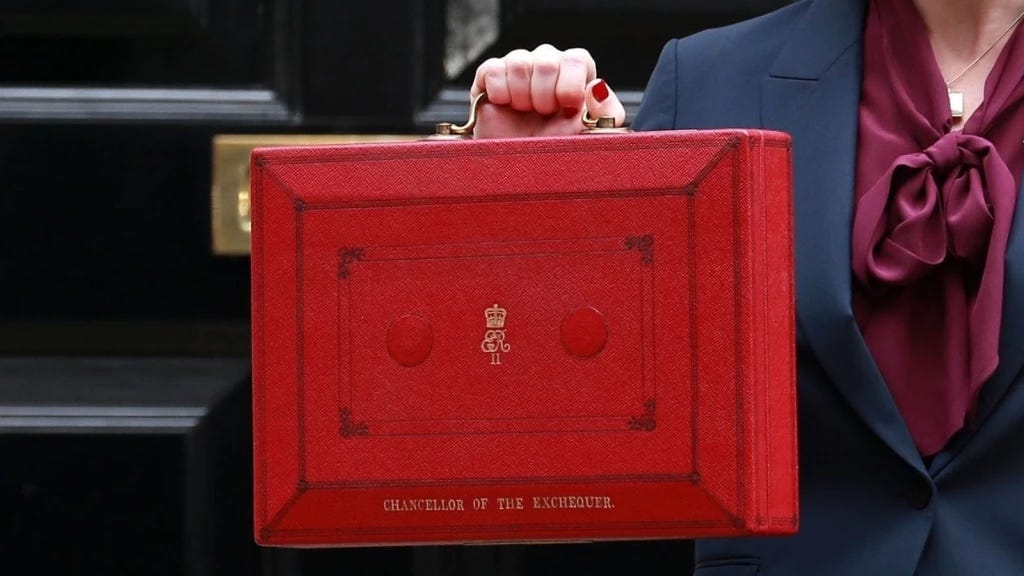
Every time the Government raises a tax to pay for a handout, they point to Treasury forecasts of how much that tax will raise to pay for the handout as evidence of their fiscal credibility: it is a costed plan. Yet, if the last 20 years of Budget history tell us anything, it is that Treasury forecasts are anything but an example of fiscal credibility. Time and time again, they have completely overestimated the amount of money a tax rise would raise. There are a multitude of reasons for this: a key one being that the centre-left economic orthodoxy that dominates the Treasury ignores all that free market economics teaches about the unintended consequences of tax rises and tax base behaviour.
The consequences of this failed modelling should not be ignored - the only reason why successive Governments can keep coming back for tax rises for handouts is because Treasury forecasts allow them to make the math work on paper.
The Pattern in the Data
The data below covers major tax rises since 2006, drawing on HM Treasury, OBR, HMRC, ONS data, among other sources.
2009: 50p additional rate of income tax (earnings above £150,000)
Forecast: £2.7bn/year (static costing of £6.8bn)1
Outturn: ~£1bn/year, or potentially negative in net terms2
Verdict: Far below forecast
2010: Bank levy on bank balance sheet liabilities
Forecast: £2.5bn/year3
Outturn: Rate raised multiple times to compensate; by 2025 raises ~£1.3–1.4bn/year - roughly half the original target4
Verdict: Persistent shortfall
2010: VAT rise from 17.5% to 20% (implemented January 2011)
Forecast: “At least £12 billion from 2011–12 onwards”5
Outturn: Receipts broadly met headline target, but the rise demonstrably constrained economic activity and suppressed the broader tax base6
Verdict: Headline met; macroeconomic cost underestimated
2016: Soft Drinks Industry Levy (Sugar Tax), implemented April 2018
Forecast: ~£520m/year7
Outturn: £154m in first 7 months; never exceeded £338m in any subsequent year8
Verdict: Far below forecast
2021: Corporation tax rise from 19% to 25% (from April 2023)
Forecast: £11–17bn/year additional yield9
Outturn: First year broadly as expected; 2024–25 receipts revised down £7.5bn below the OBR’s own October 2024 forecast10
Verdict: Below forecast in medium term
2021/2022: Personal income tax threshold freeze
Forecast: ~£29.3bn/year by 2027–2811
Outturn: Exceeded forecast; total boost ~£41bn by 2025 due to higher-than-expected inflation12
Verdict: Above forecast (due to unexpected inflation levels)
2022: Energy Profits Levy (windfall tax; rate ultimately 38%)
Forecast: £41.6bn total over 2022–23 to 2027–2813
Outturn: Revised down to £17.4bn for the same period, less than half the original forecast14
Verdict: Far below forecast
2024: Abolition of non-domicile tax status (from April 2025)
Forecast: ~£3.2bn/year; £34bn over five years15
Outturn: Capital gains tax receipts fell £2bn year-on-year in Q1 2025; Treasury had internally warned the measure might raise nothing at all16
Verdict: Below forecast; potentially loss-making
2024: Employers’ NI rise from 13.8% to 15%; secondary threshold cut from £9,100 to £5,000
Forecast: £25bn/year by end of forecast period17
Outturn: OBR modelled 60% passes through to workers in lower wages18; broader tax shortfall of £7.5bn in 2024–2519
Verdict: Outcome uncertain; behavioural effects emerging
Why the Forecasts Are Wrong
The Pretence of Fiscal Knowledge
There is a deeper intellectual problem at work here that Friedrich Hayek identified in his seminal essay, The Use of Knowledge in Society.
Hayek’s central argument was that the failure of central planning was not merely a practical failure of bureaucracy, but an epistemological one. The knowledge required to manage a complex economy is not concentrated in any single place. It is dispersed across millions of individuals, with each acting on local, particular, and often tacit information that cannot be aggregated, modelled, or possessed by any central planner: what is known by a single agent is only a small fraction of the total knowledge held by all members of society.
This principle applies with full force to tax forecasting. When the Treasury publishes a revenue estimate, it is not reporting a fact - as all Governments suggest - it is producing a model output conditioned on assumptions about how millions of individuals, businesses, and financial advisers will respond to a change in the rules. Those individuals possess knowledge the Treasury does not: knowledge of their own circumstances, their own legal options, their own tolerance for risk and inconvenience. They act on that knowledge. Their aggregate behaviour determines how much the tax actually raises.
Hayek would have predicted, with no great difficulty, what the 50p tax rate would do. He would have predicted what the Energy Profits Levy would do to North Sea investment. He would certainly have predicted that abolishing non-dom status - a tax specifically targeting internationally mobile, high‑net‑worth individuals who, by definition, have the means and the options to leave - would produce a behavioural response far larger than the model assumed. What the Treasury persistently treats as a parameter to be modelled, Hayek recognised as a dynamic and unknowable process: human beings adjusting their behaviour in ways that defeat the planner’s intentions, not out of perversity, but out of rational self‑interest.
This is not a counsel of despair about taxation as such - that is best saved for another article. It is a counsel of humility about the precision with which its effects can be predicted.
People with Money Change Their Behaviour
The clearest case is the 50p income tax rate. The Treasury forecast that the new top rate would raise £2.7bn a year. In the end, the evidence suggested it raised around £1bn, and quite possibly less. The reason was straightforward: roughly £16–18bn of income was shifted forward into 2009–10 - the year before the new rate came into force - by those with the means and the financial advisers to do so.
This is the Hayekian dynamic in its purest form. The individuals best placed to respond to the new rate possessed precisely the knowledge of their own financial structures, their own timing flexibility, their own alternatives that the Treasury model did not and could not capture. The model treated the tax base as a given. The taxpayers knew better.
The non‑dom abolition is the most recent and potentially most damaging example. Official models assumed only a small number of non‑doms would leave the UK in response to the new rules. Early evidence suggests the departure rate is far higher. The five‑year £34bn forecast now looks like something between wishful thinking and fantasy.
The Tax Base Erodes
The Bank Levy tells a different version of the same story. Introduced in 2011 at a rate designed to raise £2.5bn a year, it was set against a balance sheet the Treasury assumed would remain broadly stable. It did not. Banks were already shrinking their balance sheets after the financial crisis, and they continued to do so at a rate faster than the Treasury’s models assumed. The levy rate was raised repeatedly between 2011 and 2015, not to increase revenue, but simply to try to maintain the original target as the tax base contracted beneath it. Today, it raises roughly half of what was originally promised.
The Energy Profits Levy is perhaps the most spectacular example in recent history. When first announced, the forecast was that it would raise £41.6bn over six years. Within three years, that projection had been cut to less than half of that at £17.4bn. Falling energy prices played a part, but the deeper problem was that a punitive, effective tax rate of 78% on North Sea profits caused investment to collapse. The tax base, the stock of profitable production, shrank far faster than the models assumed. The Treasury taxed the North Sea so aggressively that it permanently impaired the North Sea’s future taxable capacity in the process.
The Sugar Levy: “Success” Funded by Failure
The Soft Drinks Industry Levy offers a special kind of irony. Announced in the 2016 Budget and implemented in April 2018, it was designed both to raise revenue and to reduce sugar consumption. The forecast said it would raise around £520m a year. In its first seven months, it raised £154m. It has never exceeded £338m in a full year since.
Supporters of the levy say this is not a failure: manufacturers reformulated their products so aggressively, reducing sugar content below the taxable threshold, that most soft drinks now avoid the levy entirely. The health objective was, by that measure, substantially achieved. But this only illustrates the Hayekian point in microcosm. The behavioural response that defeats the revenue forecast is the same behavioural response that determines whether the policy is first implemented at all. Firms possessed knowledge about what was technically and commercially feasible that the Treasury did not. They used it. You cannot simultaneously claim the levy was a triumph for public health and pretend the revenue forecast was a reasonable estimate.
The Deeper Problem
None of this means the Treasury or OBR are technically incompetent. In most cases, they are doing the best that can be done with the tools available to them, but we must recognise the great limits of these tools. The deeper problem is that those models are then presented to Parliament and the public with a false precision and a confident number attached to every policy that implies far greater certainty than is warranted.
Hayek described this as the “pretence of knowledge”: the tendency of those who manage economic affairs to mistake the output of a model for real knowledge about how a complex system will behave. The price of that pretence in fiscal policy is that spending commitments are built on revenue forecasts that prove illusory. When the forecast fails - as with the Energy Profits Levy’s £41.6bn that became £17.4bn, or as the non‑dom abolition’s £34bn may prove to be nothing at all - the resulting shortfall has to be filled by further tax rises, cuts to public services, or additional borrowing.
This is the cycle that Starmer’s Guardian article did not address. The spending is real. The revenue funding is not.
The Treasury invents a number. The Chancellor reads it out. The taxpayer pays when it turns out to be fiction.
Harry Richer is the Director of Fighting for a Free Future, working for Chairman the Rt Hon Steve Baker. He worked as the senior aide to Mr Baker for four years and was intimately involved in all of Mr Baker's national campaigns, including his work on the monetary system, Net Zero, and the Covid Recovery Group, acting as its Head of Research. He has also co-written multiple publications on Austrian School economics, including the 2024 Springer book, The Age of Debt Bubbles.
https://foodfoundation.org.uk/sites/default/files/2021-10/2-Briefing-Sugar-Levy_vF.pdf; https://www.beveragedaily.com/Article/2018/11/23/UK-sugar-tax-154m-raised-since-introduction/; https://www.gov.uk/government/statistics/soft-drinks-industry-levy-statistics/soft-drinks-industry-levy-statistics-commentary-2021
Clearly an observation that recognises the system is riderless without knowing what can, could or should happen.
Harry, we have spoken before. And this subject goes to the heart of the problems and to my reasoning to put them right.
Hayek realised that the idea of ‘knowing’ the effect of money flowing around the commerce of the economy is out of control.
He like now had no way of knowing how the holders of money would or could react to what they do with that money.
So taxation was just plucked out of the air.
How could anyone know who had what and where? And how that person or entity would SPEND that money.
And of course there wasn’t any road map that the money could or should take. It was and still is completely ad-hock.
There was and still isn’t any tax on unspent money. None!
And ic course there is no law that says money has to be SPENT. Just the imposition of a fiat rate demand of taxation.
But today, we have the ability to know! We can know exactly who has what. And where. It’s completely possible to know every penny if, our currency was in house within the UK banking system and it was solely a digital currency.
This was not something Hayek knew about or could ponder. So his advice I’m afraid is out of date for that reason.
Our economy that was all inherently naive in its processes can now be fully known. We have as they say…. Moved on! Or rather we haven’t! Because today’s politicians haven’t availed themselves of this option.
For instance, we can now swap all present money, coin notes and digital for a new digital only currency.
We can monitor each transaction and flow. As the people SPEND their incomes we can impose a rigid time or minimum SPENDING regime to endure money flows. To resupply the need for our society to make the revenue targets required to gain the tax revenue minimums our government needs to pay its way without borrowing, ever again!!
Harry, for the first time in monetary history we can enforce the need to SPEND. In sufficient weight and time to endure the government always get their desired tax take!
No more guesswork Harry. No more deficit. No more recessions. No more low turnover. No more underfunding of our money supply and no more underfunding of government.
But especially no more underperforming!
St the same time we can make money appear from SPENDING in such large amounts that wages can grow four fold. Benefits can increase. And even the rich will be richer. Not from holding money and lending it back. But by higher incomes from all that enforced SPENDING. Giving them more money to buy goods and assets rather than just sitting on unspent money.
Harry we could in one fell swoop put all wrongs right.
It was Thatcher who took away exchange control regulations to try and get more money in to the UK. But ell it fix was Ellie an exodus of money out.
That fatal error needs to be put right.
The reason then for an inactive economy is the same now. Cash flow.
Simply, there is insufficient SPENDING in our economy. Not because there is insufficient money, far from it. It’s because not enough of that money is being SPENT. We are underfunding our economy and replacing the shortfall with borrowed money!
We need better faster and weightier cash flow. From more enforced SPENDING by those who upto now don’t have to it choose not to SPEND it but lend it back. With the extra capital and charges with interest. So we get worse off each cycle as the rich get richer.
Harry there is no incentive but need to SPEND. No tax is charged for not SPENDING. None! Not to we have to SPEND. And that’s why Hayek couldn’t know what he didn’t know!
But we are nis able to know. And predict exactly what we can need and what we must enforce to get it.
We can finally know how much exactly is in circulation in accounts. And how much is needed to be told to SPEND to achieve the revenue required for the SPENDING of government!
It’s so simple it’s incredible that no politician has seen the possibility!