


When I was in Sweden recently, the first thing I found myself doing was something that probably says a lot about me as a person. I decided to go to the Systembolaget – Sweden’s state-managed alcohol store chain.
I’d heard of it before, of course. Sweden’s state alcohol monopoly has a rather legendary reputation amongst free market circles, for all the wrong reasons. If you want to buy anything stronger than 3.5% ABV, off you go to the government drinks shop.
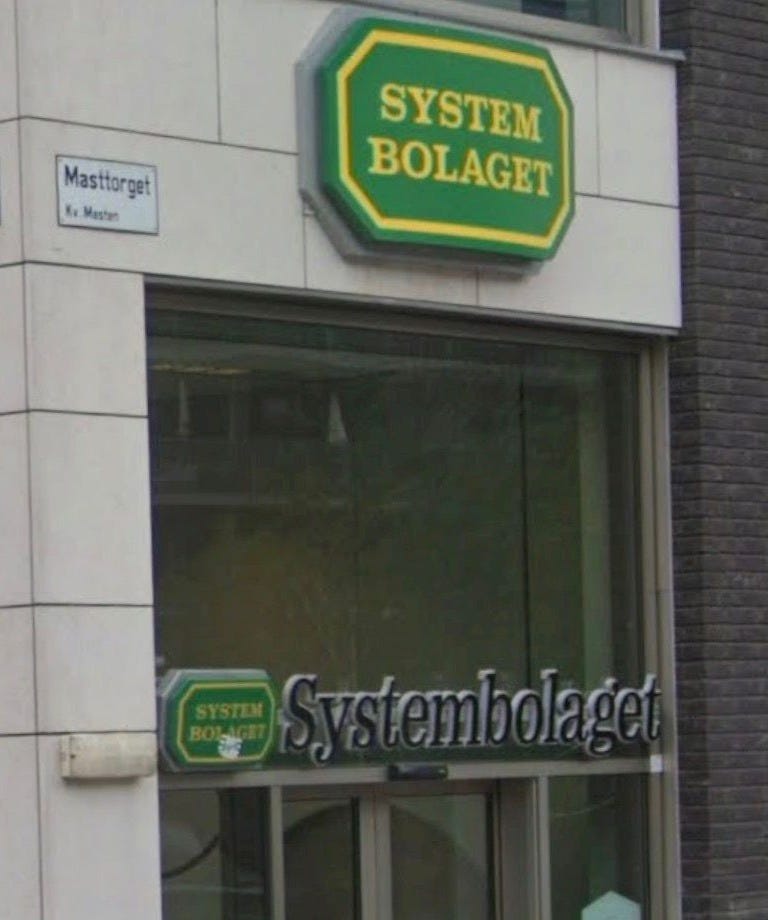
Being there in person made it harder to leave at that (not to mention, I was severely turned off by the steep prices of pints that would make London pubs blush). So, I had a look. And the more I looked, the more I found myself getting annoyed by it all.
It’s worth noting that Sweden’s alcohol regime didn’t spring fully formed from the brain of some Scandinavian technocrat. It’s the product of two-and-a-half centuries of the similar growth of understandable concerns and stopgap solutions we often see today.
In 1766, after several failed attempts to regulate drinking, King Adolf Frederick just gave up and abolished drinking restrictions altogether. This led to near-universal home distilling, with huge numbers of households making and selling alcohol themselves. Soon, Sweden became so soaked in moonshine that the government decided something had to be done.
Thus, the current Swedish mentality was born.
During the 19th century, local and regional monopolies began to emerge, first to regulate prices, then to regulate sales, and finally to funnel profits back to the state. By WWI, Sweden had moved to rationing. Afterwards, it introduced the straight-up Orwellian Bratt System, where your alcohol allowance was determined by things like your gender, income, class, and household status.
Unemployed people and welfare recipients were usually denied alcohol entirely, while wives had to share their ration with their husbands, often getting nothing. Even prohibition was floated, only narrowly being rejected in a 1922 referendum.
The Systembolaget itself emerged in 1955, after regional monopolies were fused into one national body, with various restrictions in place to make buying alcohol slightly more inconvenient.
Even then, Swedes kept finding their way around all these restrictions. Naturally, the only option was to pile amendment on amendment, each more inconvenient than the last.
The current rules are as follows: anything above 3.5% ABV can only be bought through Systembolaget, and only if you are at least 20 (the legal drinking age is 18). Products are sold individually. Discounts are banned. No chilled drinks – they might encourage immediate consumption, and no preference must be shown to any alcohol type or brand. In smaller villages, local shops can act as collection points, but the alcohol cannot sit on a shelf like any other product.
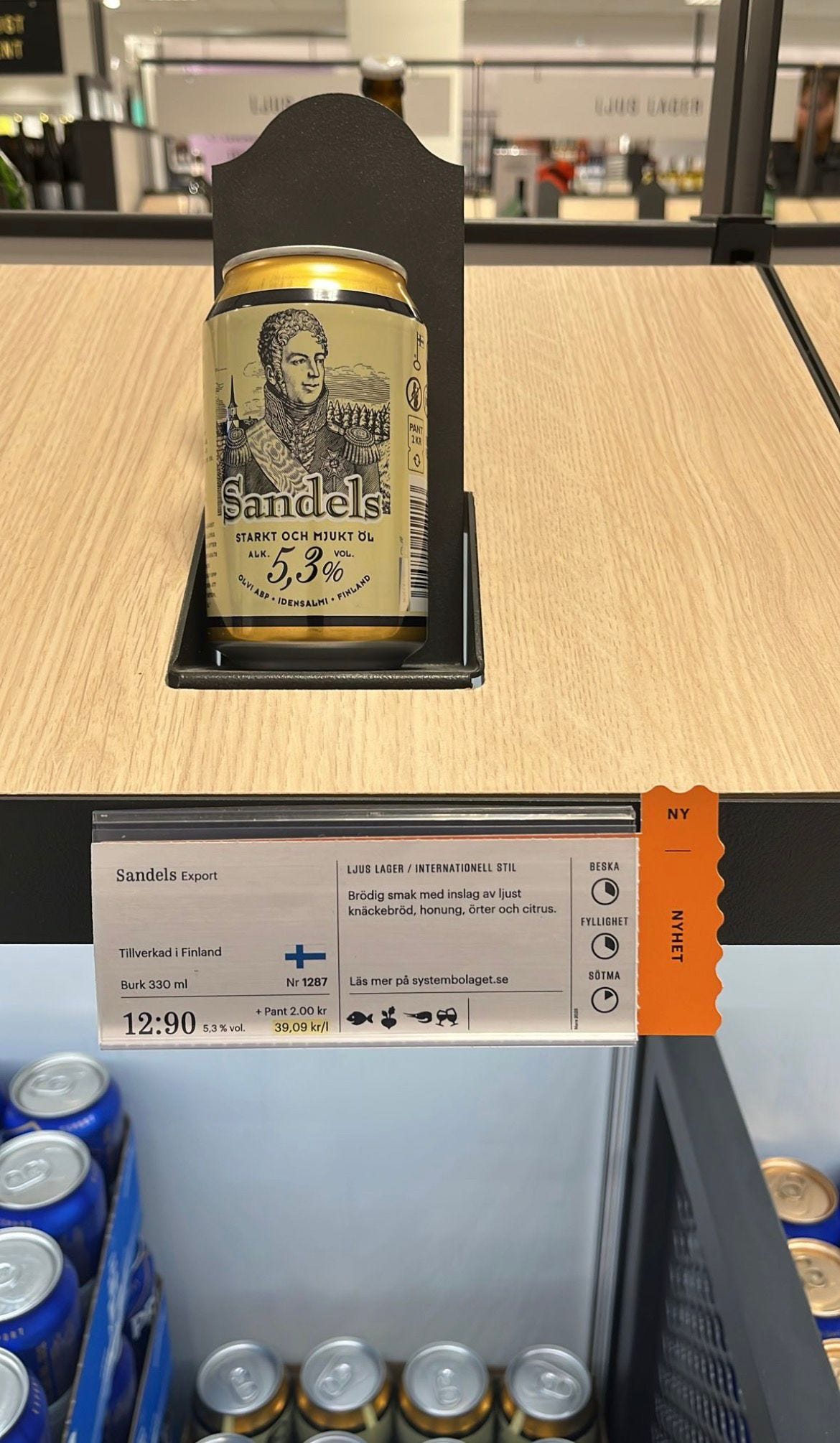
There you have the Systembolaget.
I’m sure I’m preaching to the converted here when I say this all is a bit silly. You’ve heard it all before with the usual think pieces about sin taxes and nanny statism. But I feel the need to point out something deeper.
The problem with illiberal systems like this is the same problem you find with overly strict parents. They don’t necessarily raise more disciplined children. They raise children who are better at lying.
Sweden’s alcohol laws have the same outcome. They don’t make the desire to drink disappear, nor make it more virtuous. They encourage them to adapt. Swedes stock up in duty-free, or drive to Denmark, Finland, Germany or Estonia for cheaper booze. The whole thing becomes a puzzle to be solved.
The beauty is that everyone knows none of what they’re doing is technically illegal by the letter of the law (except those that go to the black market), but none of it is what the government wanted when they established these regulations either.
And where does it stop? Should people be frisked for Carlsbergs when they cross the Øresund Bridge from Copenhagen, or Finlandia Vodka on the road from Rovaniemi to Luleå? Do they de-Schengen themselves and perform a Swexit?
Essentially, what I want to say is that too much law for the sake of it will have the same effect as having little law at all, albeit expressed in very different ways.
Too little law leaves room for disorder because rules are absent or ignored. Even in anarchist societies, you have some semblance of order that dictates it.
Too much law means people comply, but they stop taking the spirit of the rules seriously. They don’t really believe in what they are being asked to do, just learn how to live around it. Where there’s a will, there’s a way, and that stretches from soft nanny states to authoritarian dictatorships.
What’s also most interesting to me about the Systembolaget being a Swedish thing in particular is that many consider Sweden a high-trust society. It’s constantly praised, with good reason, as a country where institutions work, and civic life feels respectable and safe.
Yet on alcohol, that trust vanishes. You may buy your whisky but only through the approved institution, under the approved conditions, in the exact way we want you to. To be a functioning adult, you should clearly know better than to expect otherwise. These sorts of rules forget that trust is just as much about institutions respecting citizens as it is about citizens respecting institutions.
Compare Sweden with old Blighty. Britain is hardly libertarian on alcohol; we all know that. It’s an easy target for morals and taxes alike, and, boy, has the government taken advantage of that. The fact that it hasn’t been hit with an advertising ban like cigarettes yet is honestly impressive.
But it still allows adults to buy alcohol in “ordinary” shops under “regular” conditions. The default mindset with that and other things is still that adults can be trusted with that freedom, even if some of them will use it badly. People can still buy kitchen knives in the UK, yet we all know that 100% of weapons found in knife crime are knives. That’s just the natural inherent risk you find in anything.
You could argue that the two countries here have the reverse attitude towards smoking, with the UK’s progressive smoking ban. Either way, this is just a state trying to social engineer its citizens out of even thinking about bad things, but to a much grander scale than slapping a screen door in front of cigarettes and rotting lungs on their packaging.
The refusal to sell chilled drinks is probably the best example of this subtle influence. A cold beer isn’t morally more dangerous than a warm one. The state just wants to make consumption a tiny bit less spontaneous.
Now you have harm reduction at its most literal, forgetting that the whole point of harm reduction is that you’re supposed to meet people where they’re at, not where you want them to be.
Once policy starts regulating things like *temperature* because enjoyment might happen too early, it stops being solely about safeguarding public health. The best kind of law is when people can see its purpose and regard it as understandably proportionate.
Take things like universal age limits, drink-driving laws, targeted addiction help pipelines, and restrictions on selling to intoxicated people; all of these are easy to defend in theory. But the moment regulation expands into a whole architectural system with myriad rules that require constant updating, it becomes gamifiable.
There you have the dangers of paternalism, even in a free society, because it lets you see just how society can become strangely comfortable with being treated like a supervised one, so long as the supervision is accompanied by a nice-sounding explanation, and they still have the option to flout rules anyway.
A liberal society needs law, rule of or otherwise. But it also needs to know when to stop. That goes not only for Sweden, but for the UK as well.
Still, Sweden has one thing going for it. Once you grit your teeth, pick up your 6 individual cans of warm Eriksberg and show your ID at the till, you at least get the reward of discovering that state-subsidised booze is super cheap. For all my complaints, I can’t knock that part.
No wonder people like socialism.
John Abbott works for Harrow Council and is a former Westminster think tank wonk. He has previously worked at prominent free market institutions such as the IEA and EPICENTER, and at Smart Thinking. He writes on Substack at @johnooo.
