

Fighting for a Free Future is pleased to continue its new monthly series by the Rt Hon Steve Baker, Tyranny of the Month.
A. J. P. Taylor’s English History, 1914 - 1945, famously opens:
Until August 1914 a sensible, law-abiding Englishman could pass through life and hardly notice the existence of the state, beyond the post office and the policeman. He could live where he liked and as he liked. He had no official number or identity card. He could travel abroad or leave his country for ever without a passport of any sort. He could buy goods from any country in the world on the same terms as he bought goods at home. … Since 1911, it helped to insure certain classes of workers against sickness and unemployment. This tendency towards more state action was increasing. Expenditure on the social services had roughly doubled since the Liberals took office in 1905. Still, broadly speaking, the state acted only to help those who could not help themselves. It left the adult citizen alone.
How far we have fallen! Imagine, for a moment, if a person were to fall asleep in 1914 and wake up today in 2025. What might the man from 1914 say?
It turns out that in Sir Keir Starmer’s Britain, our civil liberties are alive and well… provided you don’t mind your bank account being routinely frisked by the state.
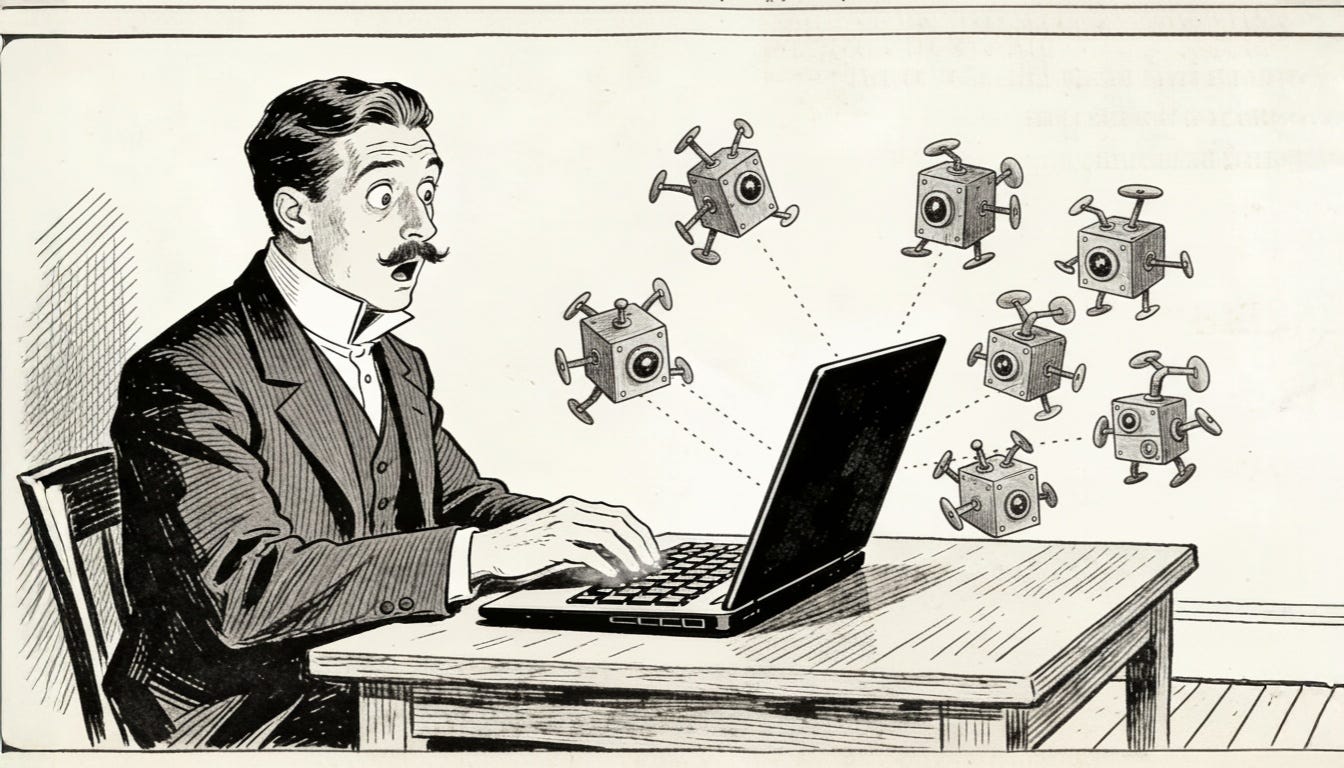
Earlier this month, we learned the Labour government will bring into force sweeping new “bank spying” powers that compel banks and other financial institutions to run mass, automated checks on millions of customers’ accounts to flag possible benefit ineligibility, without any need for individual suspicion.
Under the Public Authorities (Fraud, Error and Recovery) Act, the Department for Work and Pensions can issue “Eligibility Verification Notices” requiring banks to scan accounts receiving certain benefits against financial thresholds, such as savings over £16,000 for Universal Credit, with any “matches” reported back to the state for further action.
Surely there is a need to stamp out on fraud within our welfare system. But somewhere, a classical liberal is clutching their copy of On Liberty and protesting that when Mill talked about “experiments in living,” he didn’t mean inquiring into everyone’s direct debits.
Under the new Fraud, Error and Debt powers being brought into force, banks must run automated checks on millions of accounts to see who looks to be living a bit too lavishly for certain benefits, all without the inconvenience of individual suspicion. For a government that insists it doesn’t trust markets to allocate resources, it has enormous faith in algorithms that will decide whether your balances are an honest attempt to save, or evidence of thoughtcrime against the welfare state.
Of course, they insist, this is not ‘mass surveillance’: nay, it is simply “proportionate data sharing to tackle fraud”. Much in the same way, one imagines, that putting CCTV in your bathroom is just “optimising domestic security outcomes”. Charities warn of “unprecedented population‑wide surveillance” and “catastrophic consequences”, concerns so commonly expressed nowadays that in Westminster they’re being taken as evidence that policy is being successfully announced.
Libertarians have long worried that the state would treat everyone as a suspect; Labour has solved this by sparing us the “worry” stage and going straight into implementation. The presumption of innocence has been replaced by the presumption that if you are the beneficiary of DWP entitlements and have managed to save more than £16,000, you’re probably hiding something and deserve a nice, automated rummage through your financial underwear drawer.
Ministers would surely like to say that “if you’ve done nothing wrong, you’ve nothing to fear”, a line that reliably reassures only people who have never been on the wrong end of an IT system. When this inevitably produces the next Horizon‑style scandal, the government can comfort itself that, while thousands were wrongly flagged, at least the databases were beautifully interoperable (although this seems unlikely).
And what of those of us who remain deeply concerned about the perils of unintended consequences? The scene writes itself: earnest ministers explaining that this is “simply modernisation”, backbenchers nodding along like they’re being offered an upgrade on a flight rather than a downgrade of the presumption of innocence. Somewhere on the Labour benches, an old‑school civil libertarian timidly asks if this isn’t all a bit, well, authoritarian, and is told not to worry because there will be “strong safeguards”, the newest Westminster buzz-term for “we haven’t quite worked out the kinks yet, but don’t worry; nothing so terrible could ever happen here.”
As we scan the horizon we see nothing but worry: digital IDs on the way, draconian protest laws untouched, and now a government‑run panopticon peering through the nation’s bank statements. One may well conclude that if this is what “modern, responsible government” looks like, we should just go back to being governed irresponsibly, by people who at least lacked the technological expertise to digitally rummage through our private affairs.
Thanks team. Happy 2026 Steve!