


For most of its history, Britain knew what it stood for. In the 1800s and early 1900s, the Empire made us a global power. We stood against Napoleon, der Kaiser, and Hitler when our allies had fallen. Even as the Empire dissolved, we repositioned as the bridge between Europe and America, the leader of the Commonwealth, and the architect of the post-war order.
Then came Suez.
In 1956, Britain and France invaded Egypt to take control of the Suez Canal after Nasser nationalised it. The conflict only lasted over a week, when American, Soviet and UN pressure forced us to withdraw. That day, the world understood: Britain could no longer act as a great power without permission. It was the moment we discovered we’d been demoted, but instead of accepting the new reality, we have spent the next 69 years pretending it hasn’t happened.
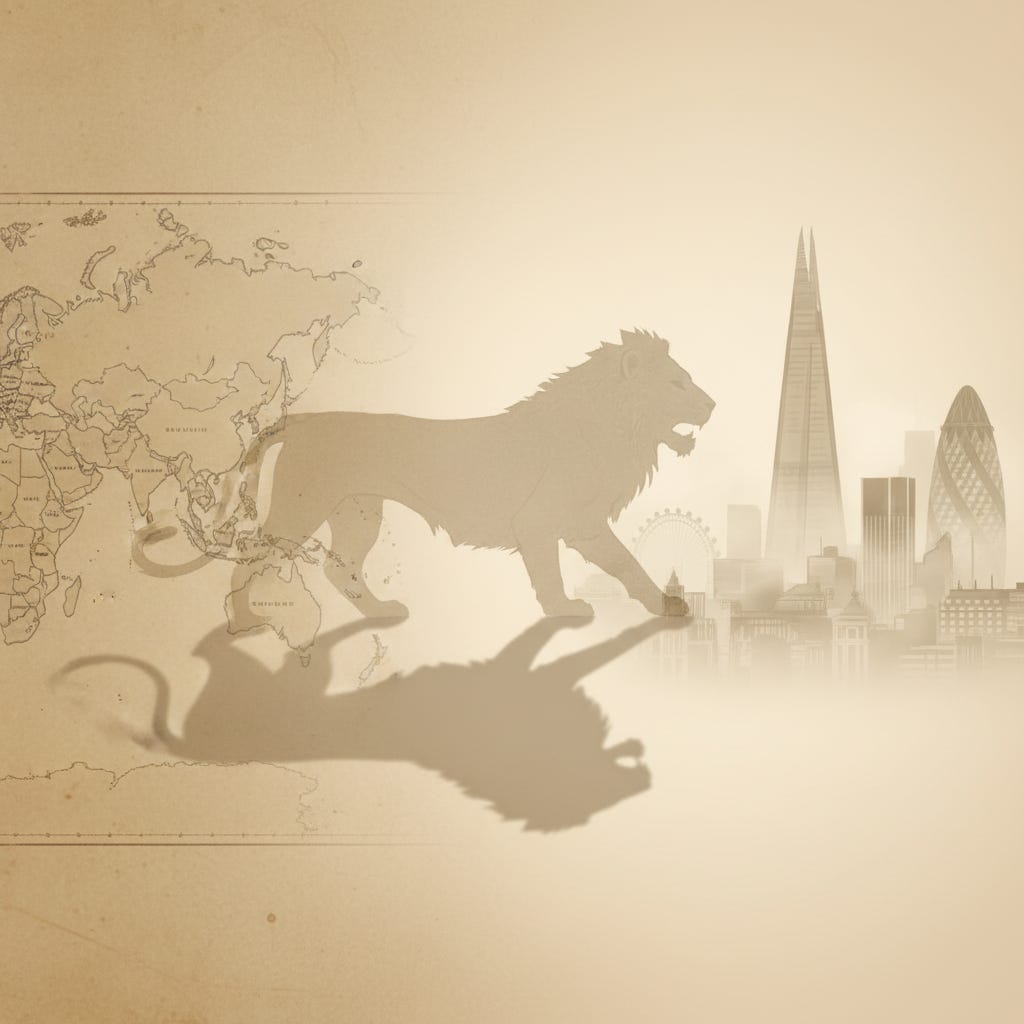
That refusal to adapt is where the rot set in. We couldn’t be an empire anymore, so we became a European power instead. But we were always the reluctant ones, the exceptional outsiders who didn’t adopt the Euro or Schengen. When that grew tiresome, we left entirely in 2016, promising “Global Britain” would restore our independence and influence. We continually strive to be a middle power, yet struggle to justify our position.
The problem isn’t that Britain lost power; let’s not be defeatist. We still possess nuclear capabilities (albeit in desperate need of an update), still hold a seat in the UN Security Council, and the sterling remains a strong, major currency. The problem is we lost the story we told ourselves about why we mattered, and never bothered writing a new one. We still speak the language of great power politics while acting like a middling one. This “Global Britain” mantra is a campaign slogan with no campaign.
The point is: some nations lose wars. Others lose meaning. Britain’s problem is the latter.
Meanwhile, the world moved on. America rebuilt its narrative around liberal internationalism and defending democracy against communism, then terrorism. The USSR and China promised salvation from Western colonial legacies through communism and the Belt and Road. Even the EU rediscovered its pan-European unity facing Russian aggression. Each has a story they and others believe in, or at least take seriously.
Britain? We strike trade deals barely large enough to shift domestic markets, let alone global ones, posture about defending democracy while cutting foreign-aid budgets, and claim moral leadership while shirking any serious diplomatic presence without handholding.
Take trade. Since leaving the EU, the government boasts of 40-odd agreements covering 74-102 partners, depending on who you ask. Impressive quantity, that’s what one of the main ideas of Brexit was – to have our own say on trade terms. What has that bought us?
The India deal, heralded as a landmark, accounts for only 2-3% of UK trade despite India being our 11th largest partner, requiring multiple concessions to push through, such as exemption on national insurance contributions (a common theme amongst our FTAs).
Our America deal fared slightly better. We weathered Liberation Day better than most, reducing tariffs on some major exports. But it didn’t touch strong chemicals or services exports, and the tariff reductions were skewed strongly in America’s favour, since we had to tiptoe around earning the ire of Trump. It’s not even a proper one-on-one deal since it isn’t legally binding and indirectly incentivises further trade barriers with third parties like China. Given our history, we shouldn’t be used as a leverage chip.
And the rest? We’ve got our piecemeal EU FTA, where we had to haggle over fishing, our decent, if unremarkable, Australian, New Zealand and Japanese ones, and the 33 others which are just rollovers from our EU days. It’s great that we kept them, but why not push for better?
Diplomacy follows the same pattern. The UK has a history of “quiet influence,” but our peace-building work is fragmented and underfunded. Consider the Gaza ceasefire, where our victory was claiming quiet influence that our partners barely credited. We couldn’t even decide which side to support, sitting on the fence with our most serious threat being half-hearted sanction attempts and “threats” to recognise Palestine. That’ll show ‘em.
This is what happens when a nation performs greatness without believing its own script. We’re trapped between imperial nostalgia and middle power self-importance, unable to admit we’re no longer a great power but unwilling to figure out what kind of middle power we actually want to be.
And this is why no one takes us seriously anymore. Why should they, when we don’t know what we stand for?
There have been glimpses of something better. Ukraine showed what Britain could be when it acts with conviction rather than nostalgia. We were among the first to arm Kyiv, amongst the harshest on Russian sanctions, and, for a brief moment, led with moral clarity. But even that has faded. Our support has grown cautious and inconsistent, while voices like Reform chip away at the consensus, reframing the war as someone else’s problem, caused by us. Even our best attempt at reclamation couldn’t hold.
Here’s where many would reach for an easy ideological fix. Maybe a dose of classical liberalism and a bit more free trade. Truth is, this problem goes deeper.
Classical liberalism should, in theory, still be Britain’s natural foundation, even if it’s lost its way since. Our greatness came from our embracing of individual liberty, free trade, the rule of law, and limited but effective government. They’re our historical exports as well as our values, the parts of the imperial story that we love to espouse.
So, we should get back to our roots. Make the Commonwealth more than just a vague bloc used for hosting games sometimes. We should rebuild it to what it should have always been: a network for genuine free trade, not the shallow agreements we’ve been signing, held up by countries seeking the same goals as us. A mutual recognition of standards, the freedom of movement for professionals, and the elimination of non-tariff barriers. This is the kind of economic integration classical liberals push for, not what politicians can claim at press conferences.
Britain should also become the voice for institutional transparency and anti-corruption. We have world-class legal institutions, a relatively clean, if bloated, civil service, and a history of exporting common law. Instead of lecturing from on high, we could offer practical support: train judges, share regulatory frameworks, and build capacity for smaller democracies trying to strengthen their institutions.
We’ve done this before and done it well. In Kosovo, Britain played a major role in establishing the EU Rule of Law Mission, providing judges, prosecutors, and technical expertise to rebuild a functioning judicial system from scratch. The result saw reduced corruption, improved judicial independence, and a sustainable legal framework.
This isn’t a plea for a busier state. It is a plea for simpler rules, simpler institutions, and measurable delivery in the few areas where Britain can set standards. That is how a liberal middle power acts: by making others’ choices easier through predictability.
But even if we bring in a cabinet of Steve Bakers dedicated to this mission, that only solves half the problem. The other half is getting others to believe it.
This is where honesty becomes the only viable strategy. Britain cannot be a superpower in the way we once were. We cannot police the world or reshape global trade architecture single-handedly, nor do we need to. But a nation of 69 million with the world’s sixth-largest economy, a global financial and cultural hub, and centuries of diplomatic infrastructure can still matter if we’re credible.
Credibility means choosing battles we can actually win and commitments we can actually keep. Be the most reliable voice for the things we claim to care about, rather than the loudest voice pretending to care about everything.
If we commit ourselves to this sort of thinking, we can become a more politically involved Switzerland, one where our integrity is respected and our input valued, but not implored. Otherwise, we will keep meddling in global events that only serve to damage our standing.
Our involvement in foreign affairs should not be based on saviourism or grandiosity. Promote the liberal world view, but don’t enforce it, particularly when the pretences for it are iffy at best. Bring in structure, not weapons for the sake of it. And when we do, we must be sure why we’re doing it, who for, and for what goal. That way, we’re not a lapdog to be called into battle at the behest of the Americans or NATO; we’re a crucial factor in ensuring the stability necessary to keep an international system like the UN functioning.
Britain doesn’t need to be feared again, only believed again. Power fades, but meaning doesn’t have to.
John Abbott works at Smart Thinking, a think tank network connecting London’s think tank world. He has previously worked at prominent free market institutions such as the IEA and EPICENTER.
