


Last month, Fighting for a Free Future was delighted to announce Voices for Freedom with our first two voices: former SpAd Eve Lugg and political commentator and broadcaster Albie Amankona. Each Voice for Freedom will be an advocate for liberty, fighting for freedom and free markets. On the last Thursday of every month, Eve Lugg will bring her insights and analysis of the latest in Westminster and British politics to our subscribers at Voices for a Free Future.

“Socialists don’t like ordinary people choosing, for they might not choose Socialism” said the Iron Lady to the Conservative Party Conference in 1989. It should come as no surprise, then, that the legalistic utopia of Starmer’s Britain abhors anything that even faintly resembles choice.
Despite the protestations of whichever minister has been wheeled out to cover for the Prime Minister, Labour policy seems perfectly calibrated to deny as many ordinary people as possible any involvement in how this country is run. Consider the pattern: plans to curtail jury trials would have removed ordinary citizens from one of the oldest and most important expressions of democratic participation in our legal system. Presented as efficiency, in reality, the removal of choice.
Similarly, deliberately savage punishments for “dangerous speech” made sure that people thought twice before voicing criticism of policy outcomes around immigration and ‘’two-tier’ justice that are absurdly mainstream. These are no longer political debates but areas to be managed and moderated.
Even more revealing was the attempted postponement of local elections. The move was couched in the sterile language of process. It was not about avoiding voters, we were told, merely about administrative sequencing. When backlash followed, the U-turn was explained in equally bloodless terms: legal advice had changed. Should we cancel local elections? Computer says no.
The aversion to choice runs in both directions; it is not just for the voters but the government too, because having to choose would mean having to make a decision and decisions mean risk - an anathema to the proceduralist. To choose is to risk error. To decide means dealing with consequences. Far safer to defer to the lawyers, to say that obligations compel action, that the system requires it, that there is simply no alternative.
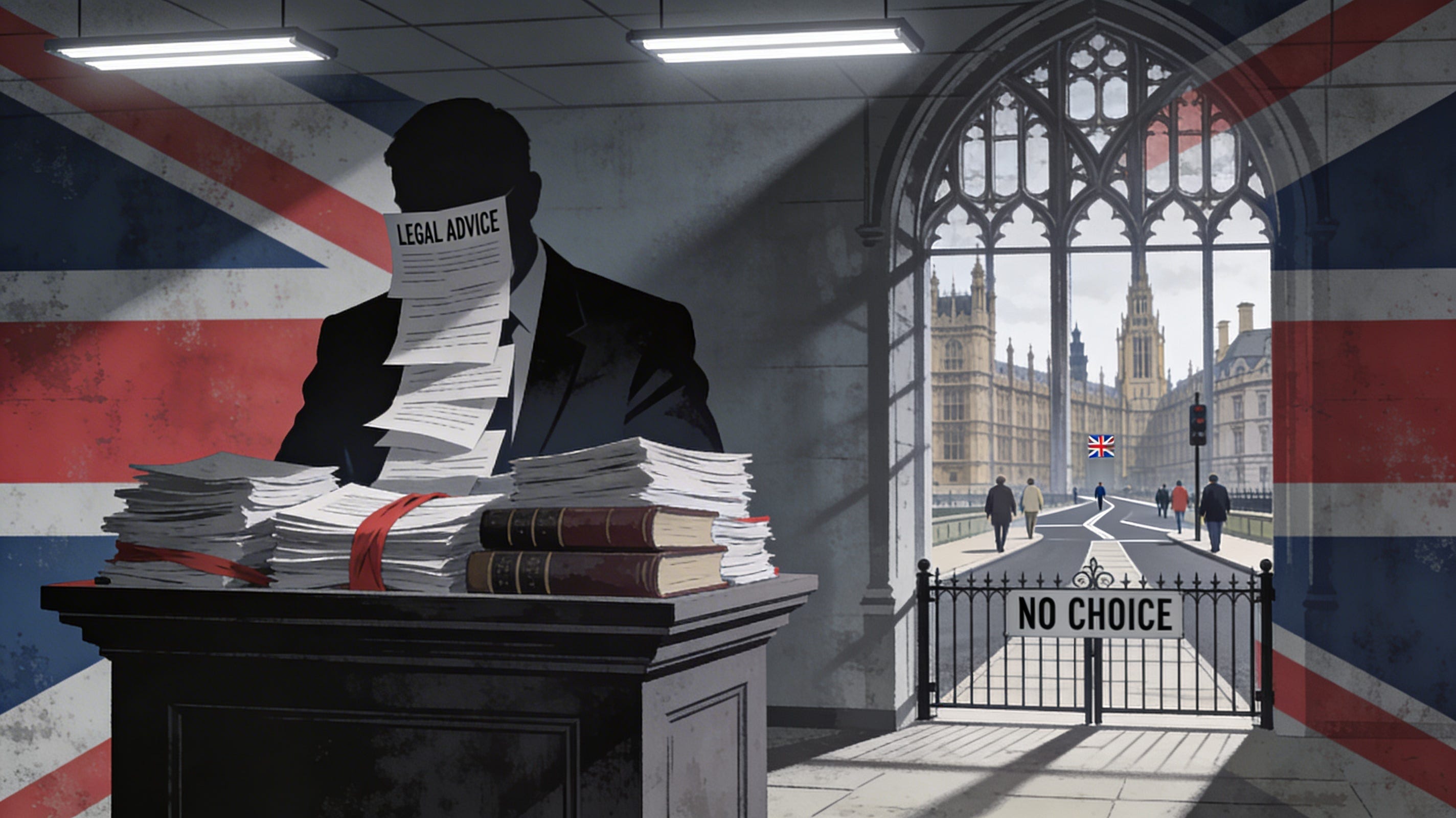
As was pointed out in the Telegraph last week, Starmer’s ideal government would be one that has no room for “individual judgment or decision making.” Instead, “all acts of government would emerge fully formed from the duties and obligations of the legal system.”
To be fair, legal advice does matter. Governing is constrained, often frustratingly so. But under Starmer, the constant reference to legal advice appears less a constraint than a reflex - the first and final answer to any contentious question. Faced with a difficult choice over whether to support Trump’s military strikes against Iran? Just say that the legal advice says no, decision avoided. Wondering what to do with the Chagos Islands? Legal advice says give them away, problem solved. In this way, risk is deferred to the rulebook, and the messy business of owning a decision is quietly avoided.
But there are always consequences. As the Chicago School economist Thomas Sowell once pointed out, “there are no correct answers in politics, only trade-offs”. This means that, in the real world, mass migration comes at a cost, the welfare state comes at a cost, and the cost in politics usually ends up being paid with a very limited currency - public support.
Most governments know that it is a resource that must be carefully earned, used wisely, and then renewed. But perhaps since this government did not have to do an awful lot to earn it in the first place - as the Conservatives did the hard work for them - it seems Labour would rather do away with it entirely. Prevent the public from having a vote, or an opinion on how the country is run, and Starmer does not have to deal with the consequences of his total lack of any decision-making. A perfect, legalistic system where choice is removed at every level, replaced by procedure.
This sort of government-by-rote suits the socialist, who would like to believe that there are no costs to their good deeds. But to the conservative, choice is necessary, difficult decisions are unavoidable, as are the risks that come with it and the rewards too.
Eve Lugg is a Voice for Freedom with Fighting for a Free Future. Eve Lugg served as Special Adviser (SpAd) in the Cabinet Office and brings with her experience in policy and comms, as well as knowledge of how Whitehall really operates.

Starmer is a lawyer and a bureaucrat, used to working within legal rules and boundaries, so now finds it convenient to hide behind them when faced with a decision. That's not acceptable when one of your tasks as PM is to work out what changes to law should be proposed to Parliament.